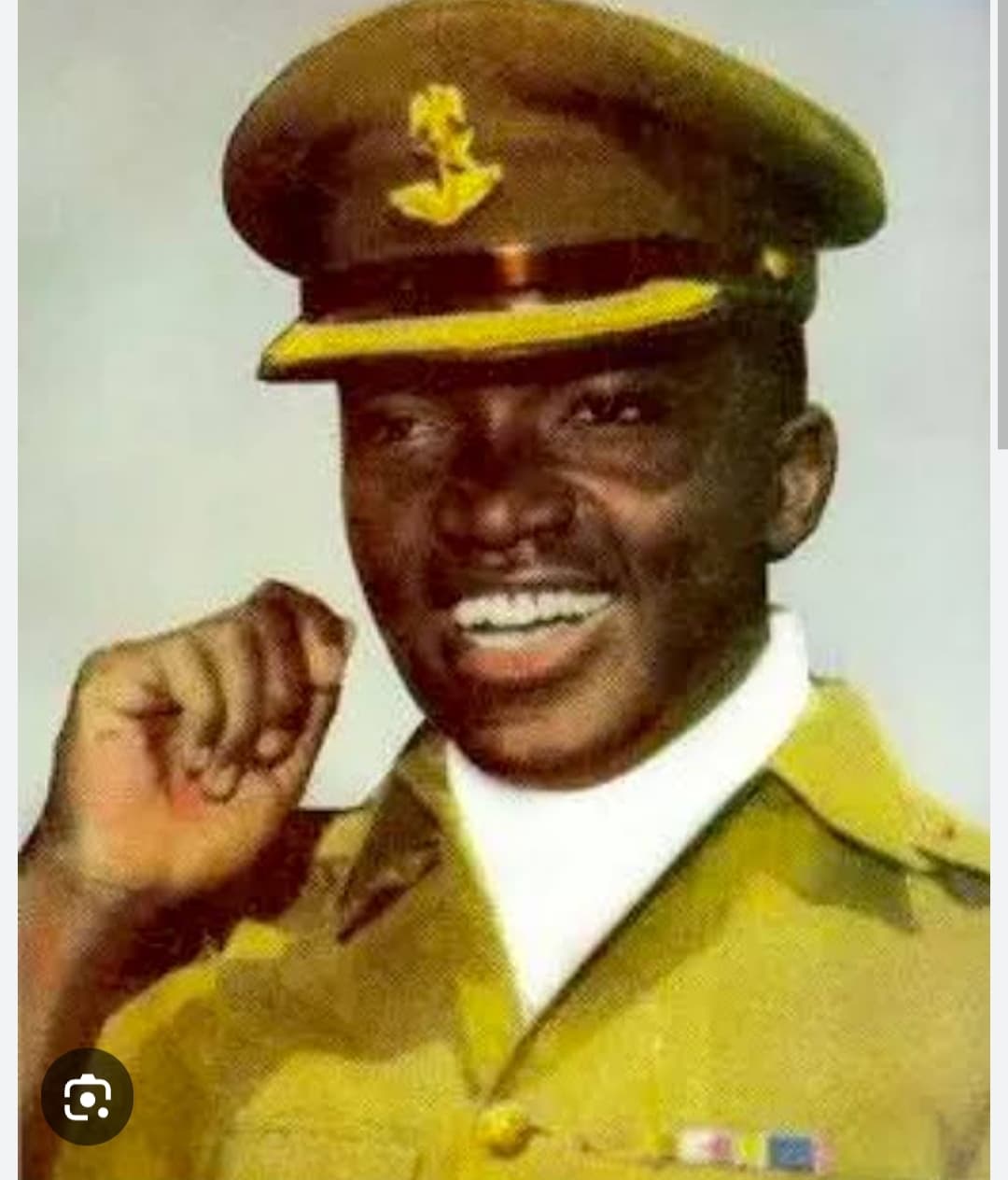

Filling the Historical Gap: Northerners Appreciated Late Major Nzeogwu, Writes Historian, Nwankwo Anthony Nwaezeigwe
By Emeka Esogbue
Renowned historian and scholar, Dr. Nwankwo Anthony Nwaezeigwe, has argued that many Northerners held Anioma's late Major Patrick Chukwuma Kaduna Nzeogwu in high regard and regarded him as a committed Nigerian nationalist rather than an ethnic partisan. The respected historiographer made this assertion in a recent historical commentary that has attracted widespread attention across major social media platforms.
According to Dr. Nwaezeigwe, Major Nzeogwu's political and military actions should be understood within the broader context of Nigeria's turbulent post-independence history rather than through the narrow lens of ethnic politics. He maintained that Nzeogwu was, first and foremost, a nationalist who believed in the unity and progress of Nigeria as a nation-state.
The historian contended that Nzeogwu's eventual participation in the Biafran cause was not a reflection of separatist convictions but rather a consequence of the political and military circumstances that unfolded following the January 15, 1966 military coup. In his view, historical evidence does not support the portrayal of Nzeogwu as an ethnic agitator or as one of the principal architects of Nigeria's civil conflict.
Dr. Nwaezeigwe questioned what he described as either historical ignorance or a self-defeating conspiracy of misinformation that has perpetuated the belief that the assassination of the late Sir Ahmadu Bello, the Sardauna of Sokoto, by Major Nzeogwu was solely responsible for the anti-Igbo sentiments and eventual hostilities that culminated in the Nigerian Civil War.
To challenge this narrative, the historian pointed to a series of anti-Igbo disturbances that occurred before and after the January 1966 coup. These included the 1945 anti-Igbo riots in Jos, the 1953 anti-Igbo disturbances in Kano, and the widespread anti-Igbo massacres that erupted across Northern Nigeria beginning on May 29, 1966. According to him, these historical incidents demonstrate that ethnic tensions and violence against the Igbo predated the coup and therefore cannot be attributed exclusively to Major Nzeogwu's actions.
"Nzeogwu was not the cause of the Nigerian Civil War," Dr. Nwaezeigwe argued, insisting that the roots of the conflict were far more complex and deeply embedded in Nigeria's political evolution.
The historian further cited the testimony of Nigeria's former Minister of Defence, the late General Domkat Bali, who reportedly spoke positively of Major Nzeogwu's character and military professionalism. According to Nwaezeigwe, General Bali described Nzeogwu as a disciplined, principled and highly respected officer who enjoyed the admiration of many of his colleagues in the Nigerian Army.
Dr. Nwaezeigwe also referenced statements attributed to General Bali expressing the view that had Nzeogwu survived the civil war, he would likely have been prosecuted for his role in the January 15 coup, but might eventually have been celebrated and possibly granted freedom after serving a period of punishment. General Bali was said to have regretted Nzeogwu's death, considering it a significant loss.
Offering his interpretation of the failed coup, Dr. Nwaezeigwe maintained that the central problem associated with the January 15, 1966 intervention was not Major Nzeogwu himself. Rather, he argued that the actions of some of the coup plotters, particularly Major Emmanuel Ifeajuna, undermined the original objectives of the operation and contributed to its eventual failure.
"The problem of the January 15 coup was therefore not Major Nzeogwu but the circumstances surrounding the execution of the coup and the actions of those who sabotaged its primary objectives," Nwaezeigwe stated.
He further argued that Nzeogwu's enduring popularity in parts of Northern Nigeria explains the respect accorded to him even after his death. According to the historian, many Northerners continued to view him as a courageous and principled military officer who acted out of patriotic conviction. It was this perception, he suggested, that informed the decision to accord him full military honours and burial in Kaduna following his death during the Nigerian Civil War.
Dr. Nwaezeigwe concluded that a balanced assessment of Major Nzeogwu's life and legacy requires a careful examination of historical facts rather than reliance on popular myths or politically motivated interpretations. He urged Nigerians to revisit key episodes of the country's history with greater objectivity in order to promote national understanding and reconciliation.
Dr. Nwankwo Anthony Nwaezeigwe is a former Director of the Centre for Igbo Studies at the University of Nigeria, Nsukka. He hails from Ibusa in Delta State and is widely recognized for his contributions to Nigerian historiography and the study of Igbo history and culture.
Written by Emeka Esogbue - The Pen Master · June 22, 2026
More Articles