K. B. C. Onwubiko’s Legacy: Reflections of a Student He Inspired

By Emeka Esogbue
The study of history is shaped not only by the books we read but also by the scholars who guide our intellectual journeys. Among the historians whose influence has left an indelible mark on generations of West African students is K. B. C. Onwubiko, a distinguished scholar whose contributions to Nigerian historiography continue to resonate long after his passing.
For those of us who encountered his works and drew inspiration from his scholarship, Onwubiko was more than an author; he was a mentor from afar, a paragon of rigorous inquiry, and a source of enduring intellectual encouragement. This reflection is both a tribute to his legacy and a personal acknowledgment of the profound impact he had on my development as a historian.
*The Agboju Secondary School Journey*
My journey began at Agboju Secondary School in Lagos, a proud institution that drew its student body from several public primary schools across the state. It was a transformative period, a time for acquiring knowledge far beyond the primary grade. Every student was focused on the future; typical of the Nigerian educational system, this stage would ultimately define our career paths.
In line with the 1983 educational curriculum, students advancing into senior classes were divided into three streams: Science, Arts, and Commercial. While some received informal counseling from friendly teachers, most decided their destinies based on their natural inclinations. It was a fluid time; some students who initially identified with the sciences migrated to the Arts, while some Art students took flight to the Commercial class.
For me, it was decisively Arts from the outset. I was, by all accounts, a natural fit for the discipline. At the time, the Arts stream boasted a larger enrollment than the Science and Commercial classes combined. My peers and I immersed ourselves in Christian Religious Knowledge (popularly called Bible Knowledge or B.K.), Literature-in-English, and Fine Arts. These were complemented by Agriculture, Economics, and the two compulsory pillars: English Language and Mathematics.
Then came the choice between History and Government, as students were required to offer one but not both. Surprisingly, nearly all my peers rushed to Government. I could never fully fathom why, other than a naive assumption that the subject was a direct gateway to state governance, or perhaps a reluctance to engage with the deep storytelling of History. For me, History was a calling.
From an early age, I possessed a desire to understand the experiences, motivations, and viewpoints of people from different times and places. My decision to study History at the secondary level was informed by the discipline’s unique capacity to illuminate the past, cultivate critical thinking, and deepen one's understanding of society. Discussing the Oyo Empire, the Kanem-Bornu Empire, Dahomey or the Asante Kingdom intrigued me deeply. Narration, rather than abstract theory, was my strength. Beyond factual content, History offered an intellectual framework for interpreting human experience, social change, and national development.
*Encountering the Master Text*
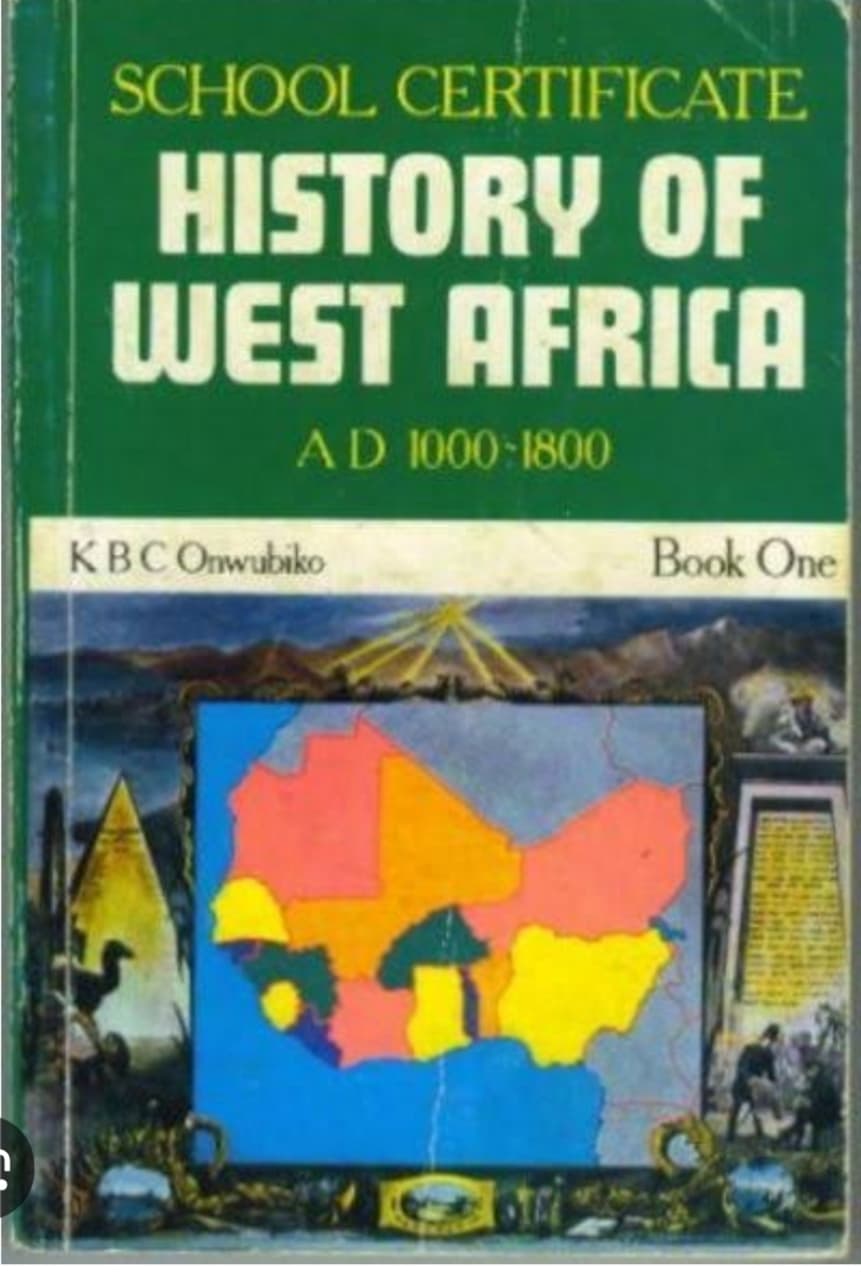
It was within this setting that I encountered the scholarship of Kelechi Onwubiko, a man whose work helped readers build a foundational interest in the past. His seminal books, "School Certificate History of West Africa, Book One: AD 1000–1800" and "School Certificate History of West Africa, Book Two: 1800–Present Day," were the standard texts that guided us. Onwubiko gifted us a genuine love for historical scholarship. As I would later learn, countless secondary school students from the 1960s through the 1980s were the academic beneficiaries of this great man.
Now, because his books were my first real introduction to rigorous history, my appreciation for the scholar soon transformed into a deep curiosity about the man behind the text. Who was K. B. C. Onwubiko?
*A Life Dedicated to Education*
Kelechi Boniface Chukwuma Onwubiko was a Nigerian historian, educator, publisher, and author. Born on June 6, 1925, in Emekuku in present-day Imo State, he attended Our Lady of Mount Carmel Primary School before proceeding to Christ the King College (CKC), Onitsha. He trained as an educator at St. Charles Teacher Training College, Onitsha, qualifying in 1950. Onwubiko taught at several prestigious schools, including St. Mary’s School, Uvuru; Sacred Heart College, Oguta; and Bishop Shanahan Teacher Training College, Orlu. In 1960, he entered the University College, Ibadan, as a Federal Scholar, graduating with a degree in History in 1963. He later worked as an Editor with Longman Publishing.
Onwubiko was also deeply active in community affairs and public life. He served on the committee that produced the centenary history of the Catholic Church in Eastern Nigeria and was a dedicated member of the Knights of St. Mulumba.
For many Nigerians, Onwubiko belonged to that pioneering generation of historians including Kenneth Onwuka Dike, J. F. Ade Ajayi, and Saburi Biobaku who helped restore African history to the center of African education. His books gave thousands of students their first serious understanding of the empires, kingdoms, cultures, and political movements that shaped West Africa.
Yet, a puzzling question arose: Why is he less frequently discussed today than some of his contemporaries? This question led me to investigate the factors behind his relative obscurity in modern academic discourse.
*Unraveling the Paradox of the Textbook Historian*
Several distinct factors explain why K. B. C. Onwubiko’s name is not as widely institutionalized as those of his peers:
Unlike Dike or Ade Ajayi, who built monumental university careers, supervised doctoral students, and produced specialized archival research, Onwubiko was primarily a textbook historian. While textbooks have an enormous, widespread impact on society, academic history tends to immortalize original researchers more than classroom teachers.
He was not directly tied to a major academic "school." Dike and Ade Ajayi were central figures in developing the professional history departments at institutions like the University of Ibadan. Consequently, their names became permanently attached to broader intellectual movements and historiographical debates.
Onwubiko’s audience consisted of foundational students rather than university scholars. Millions of us devoured his books in secondary school classrooms, but scholarly citations in journals and monographs favour specialized research papers. As a result, his name became a household staple for learners without becoming a constant reference point in university seminar rooms.
This systemic issue exacerbated his erasure. The decline of history education in Nigerian schools toward the late twentieth century meant that the discipline itself lost prominence and with it, we lost the memory of the Onwubikos. When a subject is marginalized in the curriculum, the authors who once dominated its landscape gradually fade from public memory.
Furthermore, there is a poignant biographical factor: Onwubiko died relatively young in 1985 at the age of 60. By comparison, many of his contemporaries remained active in scholarship and public life for decades longer, giving them more time to publish, mentor disciples, and shape public discourse. It is a profound paradox that the most successful textbook writers often become the least discussed in high academic circles. His influence was incredibly deep, but structurally less visible.
*An Enduring Legacy*
As for me, I remember K. B. C. Onwubiko as the architect of my historical consciousness. His writings kept me up day and night, swotting his texts in preparation for examinations. What he wrote shaped me and generations of others, grounding us in a rich knowledge of West African history and preparing us for the intellectual challenges ahead.
The appeal of History lies not merely in the narration of past events, but in its ability to develop critical inquiry, historical consciousness, and an appreciation of the forces that shape human societies. These are the very qualities that K. B. C. Onwubiko exemplified in his work. He may not have his name emblazoned on university faculty buildings, but his legacy lives on in the minds of the thousands of students he inspired to look backward so that they might understand the present.
May his soul continue to rest in peace.
Written by Emeka Esogbue - The Pen Master · June 17, 2026
More Articles